Aarohi Blood Center

Did you know

Blood Groups

The ABO system is the most important blood-group system in human blood transfusion.

Red blood cell compatibility

Which groups a donor can give to, and which they can safely receive from.

A+
Can donate to

A+, AB+

Can receive from

A+, A−, O+, O−

A−
Can donate to

A+, A−, AB+, AB−

Can receive from

A−, O−

B+
Can donate to

B+, AB+

Can receive from

B+, B−, O+, O−

B−
Can donate to

B+, B−, AB+, AB−

Can receive from

B−, O−

AB+
Can donate to

AB+

Can receive from

All blood groups

AB−
Can donate to

AB+, AB−

Can receive from

A−, B−, AB−, O−

O+
Can donate to

A+, B+, AB+, O+

Can receive from

O+, O−

O−
Can donate to

All blood groups

Can receive from

O−

ABO blood group system

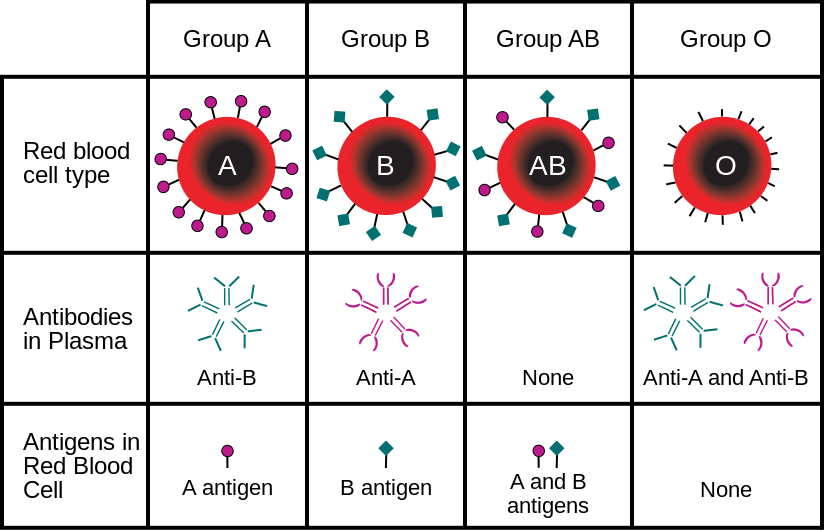
The ABO system is the most important blood-group system in human blood transfusion. The associated anti-A and anti-B antibodies are usually immunoglobulin M, abbreviated IgM. ABO IgM antibodies are produced in the first years of life by sensitisation to environmental substances such as food, bacteria and viruses.

The original terminology used by Dr Karl Landsteiner in 1901 for the classification was A/B/C; in later publications “C” became “O”. “O” is often called 0 (zero, or null) in other languages.
blood type

Universal recipient

Blood group AB individuals have both A and B antigens on the surface of their red blood cells, and their plasma does not contain antibodies against either antigen. An individual with type AB blood can therefore receive blood from any group, but cannot donate to any group other than AB.

Groups A and B

Group A individuals have the A antigen and serum containing IgM antibodies against the B antigen, so they can receive from groups A or O and donate to A or AB. Group B individuals are the mirror image: they can receive from B or O and donate to B or AB.

Universal donor

Group O individuals have neither A nor B antigens, and their serum contains both anti-A and anti-B antibodies. A group O individual can receive blood only from another group O donor, but can donate to any ABO blood group.

O negative in emergencies

If a patient needs a transfusion in an emergency and blood-group testing would cause a detrimental delay, O negative can be issued. Because it is compatible with anyone, O negative is often overused and consequently is always in short supply. Its use should be restricted to people with O negative blood, women who might be pregnant, and emergencies where blood-group testing is genuinely impracticable.

Scroll to Top